Showing posts with label wild lupine. Show all posts

Saturday, December 31, 2022

The Rest of 2022, Part IV: Insects and Plants

Whew, I guess I did have a lot to share from 2022, since this is the fourth post wrapping up this year's sightings from our property. But really, this is what I get for letting things pile up since March. In any case, here are some final assorted highlights from 2022, featuring insects (and spiders) and plants!

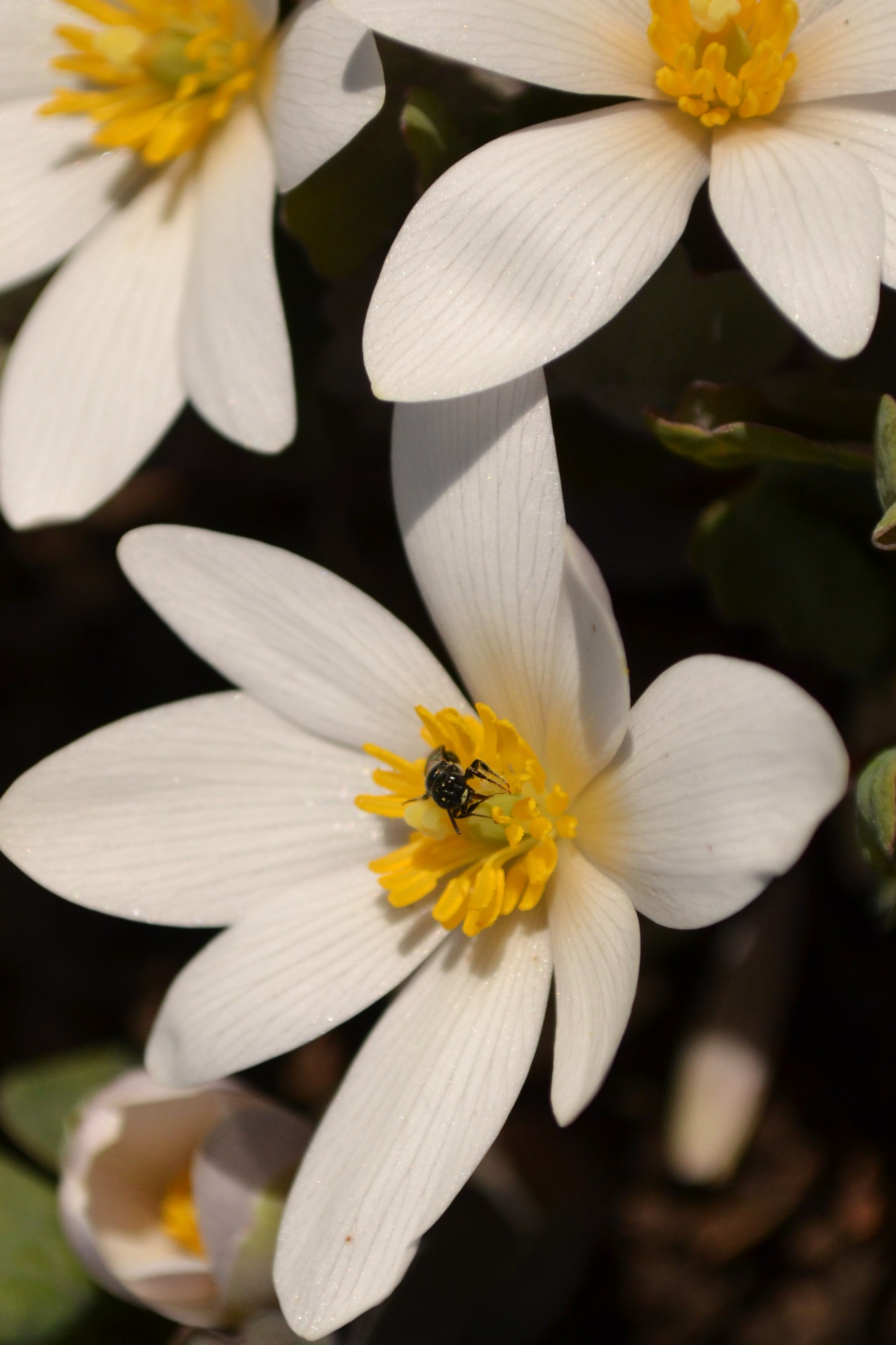
The first significant wave of spring flowers always makes me very happy, and our show started in late April this year. I was especially happy to see flowers that I've planted in front of our house in recent years (mostly thanks to our local native plant nurseries!). A small bee was enjoying these Bloodroot flowers on April 24 as much as I was:

Nearby, the Wild Ginger I planted last year was opening its first flowers at ground level:


And I was super excited to see the first flower buds on a Virginia Bluebells plant that had been in the ground here for a couple of years and that I was starting to think might never bloom:


Here are the Virginia Bluebells on May 7, open and accepting pollinators:

On May 12, I finally identified the spider species that builds intricate double-layered webs throughout our meadow every year as a Bowl and Doily Spider (Frontinella pyramitela); what a cool creature:


And here's the meadow lit-up with Bowl and Doily Spider webs on May 16:


I've been so happy to see the meadow's progress over the past few years, since we needed to have some excavation done in late 2017 and scattered a mix of native seeds over the disturbed portion. This year, the meadow settled into basically three waves of dominant flowering plants (with other species joining the show to a lesser extent). Beautiful Wild Lupine (Lupinus perennis) took the first wave, and here's the lupine-filled meadow on May 30:


By late July, Wild Bergamot (Monarda fistulosa) was the star, casting a pale purple wash over the meadow (the gradually increasing presence of Common Milkweed also helped); here's the same portion of the meadow on July 28:


September is the time of goldenrods and asters here, and goldenrod in particular turned the meadow overall golden this year; this is a view from a different point in the meadow on September 4, but this view was similar in other parts of the meadow as well:


I will be very curious to see how the meadow progresses in future years. I mostly expect the goldenrod to take over from other plants, but who knows, perhaps the lupine and bergamot will be able to hold their own and continue to add their waves of color in future years as well. We'll see!

Speaking of goldenrods and asters, here's a scene from the edge of our property on September 14. Our place really is at its most decadent in September, with blankets of flowers covering every unmown surface -- what an absolute treat, and a total surprise, since those plants were all there waiting for someone to stop mowing them so they could burst into bloom:


A few other new flower combinations in the front beds made me especially happy this year. Here's amazing Cardinal Flower (Lobelia cardinalis) with Whorled Mountain Mint (Pycnanthemum verticillatum var. pilosum) and Obedient Plant (Physostegia virginiana) peeking in on the side, all blooming profusely on July 27:


And here's Brown-eyed Susan (Rudbeckia triloba) together with Blue Mistflower (Conoclinium coelestinum) on September 10:


I so love adding plant diversity to our yard, and the pollinators seem to like it, too. I plan to keep expanding and diversifying in future years!

Jumping over to insects, here's a dragonfly in the yard on June 11, an aptly named Dot-tailed Whiteface:

We found this Maple Spanworm caterpillar (Ennomos magnaria) pretending to be a stick on the mailbox on June 16:


Is that an incredible stick mimic or what? It looked especially at home when I put it on a Silver Maple twig (one of its many food plants):

I planted some Pearly Everlasting (Anaphalis margaritacea) in the front flower bed last year, and this year a whole bunch of American Lady caterpillars (Vanessa virginiensis) showed up to munch on the leaves and developing buds. These caterpillars are cool and the butterflies are pretty, but they also ate a lot of the plant, so if they show up again next year I'll likely relocate most of them:


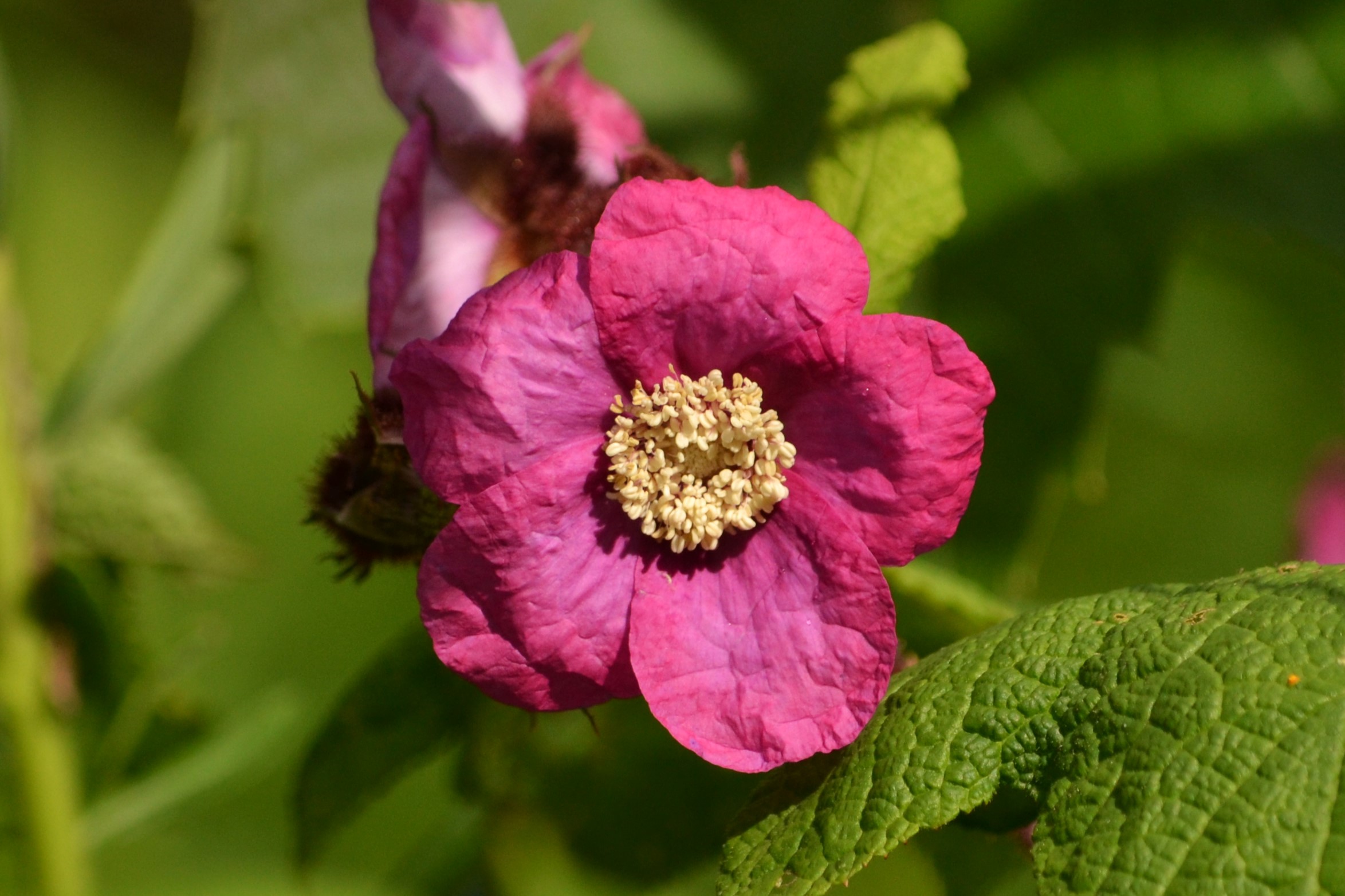
Purple-flowering Raspberry (Rubus odoratus) is a native plant that already had a strong foothold in a semi-shaded area near our house when we moved in, and it's continued to expand in this area in recent years; these pictures are from June 23:


I love this plant's crinkled purple flowers:

I still haven't been able to identify the species of fritillary butterflies we have in our yard every year, but this individual was looking especially pretty on July 17 on Purple Coneflower:


A few Spicebush Swallowtail caterpillars grew nice and big on our Spicebush plants this year; here's a big caterpillar with its fancy eyespots sheltering in a leaf on July 28:

I also saw a bunch of Black Swallowtail caterpillars this year, both on wild Queen Anne's Lace plants and on my fennel and dill plants in the garden. Here's a big fennel-munching individual on August 17:
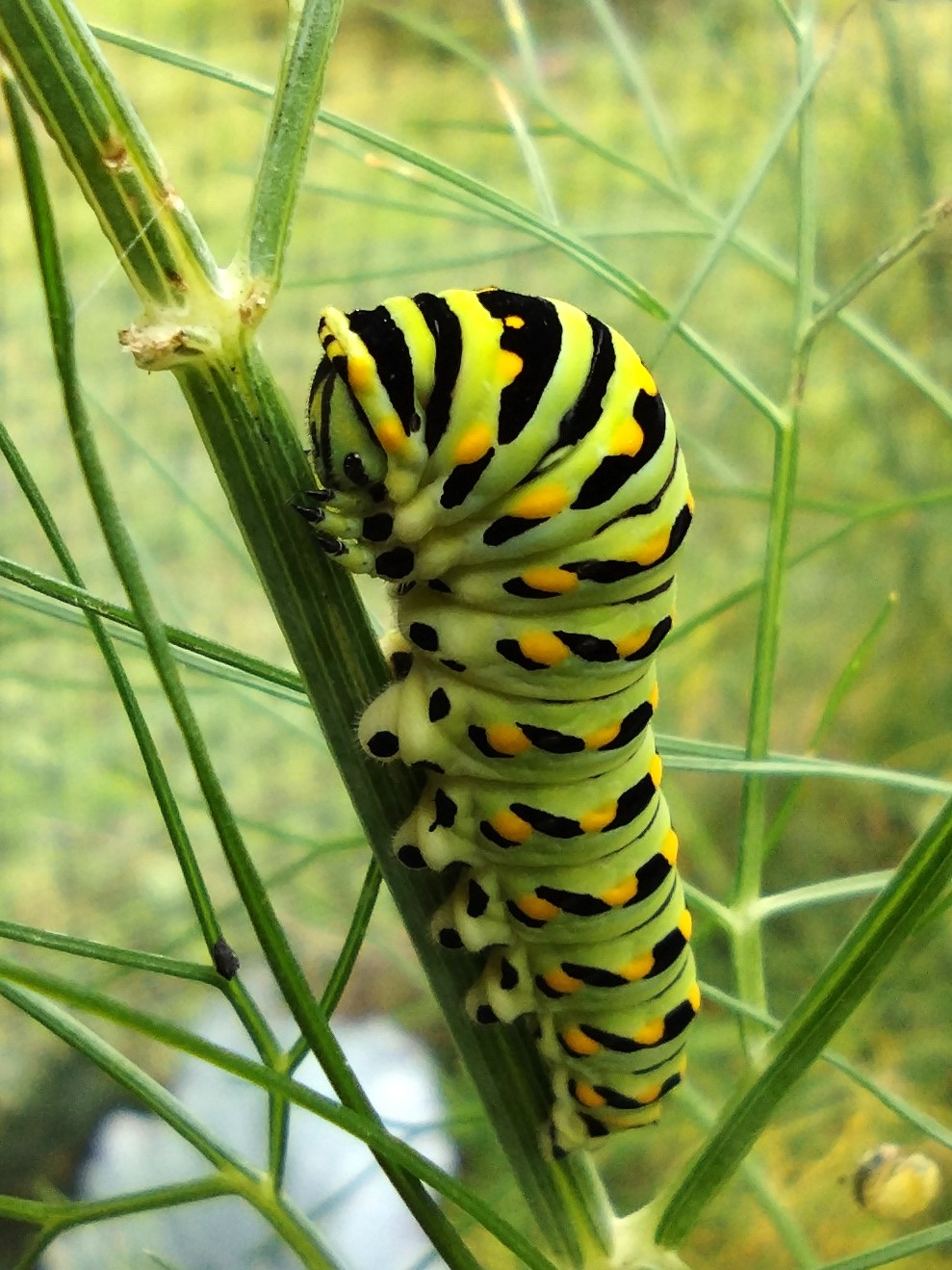

And here are a couple of caterpillars on Queen Anne's Lace on August 21:


It's hard for me to pass up an opportunity to take pictures of Hummingbird Clearwing moths, even though these fancy moths are quite common on our property in the summer. They're just so cool. This moth was enjoying a patch of Garden Phlox flowers on August 7:


And this individual was feasting from New York Ironweed (another relatively recent addition in our front flower beds) on September 3:

I love the Ironweed's super curly bits in this next picture:


These Gray Dogwood berries were looking especially pretty on their pink stems on August 26:


Also on August 26, I found this cute baby White Pine in the meadow, surrounded by seedheads of what I'm pretty sure is Wild Basil (Satureja vulgaris):


Here's a backlit view of Wild Basil seedheads on October 14 -- these plants are common throughout the meadow:


In the woods, a few Wild Basil plants were still flowering:


Our White Ash trees are gradually being eaten by Emerald Ash Borer, but this year nearly all of the trees on our property had a big crop of seeds; here's a picture of the seeds on otherwise bare branches on October 14:


Also on October 14, I admired the gorgeous colors of American Hazelnut leaves, with next year's catkins and buds also in view:


In the woods, fallen White Pine needles had turned the surface of the little pond golden:


This falling needle had enough force to punch through a yellowing beech leaf:


Meanwhile, the Virginia Creeper vines that cover the trees on the edge of our woods had dropped their leaves but were still holding on to brilliant pink stems, making the tree trunks look like they'd sprouted some weird pink growth:


And for one last burst of color in this post, here's a Six-spotted Tiger Beetle that was hiding in our front yard on October 29, until I exposed its sandy hiding place under a rock:


And those are some highlights from 2022! Happy new year! Perhaps I'll manage to post more frequently in 2023. :)

Friday, July 10, 2020

Spring and Early Summer Highlights: Part III

OK, here's one more post catching up with April, May, and June around our house!

Yet More Birds

The trail camera in the woods made several videos featuring cool birds this spring. The following video compiles a few especially exciting clips: First, some deer triggered the camera while a Barred Owl happened to be calling nearby -- I've heard a pair of Barred Owls calling individually and together a whole lot this year, and I suspect they've been nesting somewhere in the woods surrounding our property. Next is a video of a Wild Turkey foraging in the underbrush; it's always neat to see these big birds up close. Then, there's another deer-triggered video that captured a Wood Thrush's amazing song; I hear Wood Thrushes only occasionally around here, and getting to hear this song so clearly is such a treat. And finally, incredibly, there's a video of an adult Ruffed Grouse and two tiny chicks foraging at midday. I'd glimpsed Ruffed Grouse in our woods only a couple of times before, and then this family group wandered past the trail camera on three different days. I love Ruffed Grouse a whole lot, and I'm so happy to know that we have them as neighbors.


Amphibians and Others

I've known for a few years now that Gray Treefrogs live around here, and I suspect that they're fairly common, because I hear them trilling every year in May, June, and July. I'd never actually seen one of these mostly arboreal and well-camouflaged amphibians, however, until this year.... On the night of May 22, with warm temperatures and heavy rain -- wonder of wonders -- two Gray Treefrogs appeared right our front porch. Oh my goodness!
 

Paul was admiring these frogs with me, and he pointed out that their skin is all bumpy and mottled, a lot like a toad. But their shape is so treefrog-y, all low to the ground and spread out, and with those big round suction-cup toes.

These two treefrogs were very active -- we'd turn off the light and go inside, and then we'd look out onto the porch again a few minutes later and they'd be in entirely different spots. One of the treefrogs perched on top of our door frame, like the world's most adorable gargoyle:
 

The other treefrog ended up clinging to a window, which meant we got to see a treefrog belly. :)
 

The Gray Treefrogs were the stars of the show, but tons of other amphibians also kept showing up near our porch on that warm rainy night. This little Spring Peeper was adorable and bold:


And here's a Red Eft (juvenile Red-spotted Newt) with an American Toad hulking behind:


Amphibians are awesome!

I'll close this summary with a couple more sights. There have been many interesting insects around, but here's one that's entirely new to me: A male Glowworm Beetle (possibly Phengodes plumosa) who showed up in my garden on June 5. Apparently female Glowworm Beetles look like larvae, and both the females and the larvae are luminescent -- amazing. I'm really impressed by the antennae on this male. What a weird bug:


And finally, the Wild Lupine we planted in our meadow a few years ago put on a fantastic show in June. I love looking at these thick stands of purple and blue flowers:
 

Whew! OK, we're all caught up! Now onward to the rest of summer. :)

Saturday, June 29, 2019

June Families and More

So much of June seems to be about babies. Many of my sightings these past few weeks have revolved around nests and eggs and growing creatures, many of them building on processes that started back in May. I have other sights to share, too, but let's start with the babies!

First, to recap where we left off in my last post (on June 5): an Eastern Bluebird pair had built and then abandoned a nest in one of our nest boxes; our Eastern Phoebe pair raised a Brown-headed Cowbird chick and had two of their own babies still in the nest under our back deck; and a pair of Tree Swallows had eggs in our second nest box.

Let's follow up with the phoebes first. I'm so very impressed with these two parents and all they've accomplished so far this year. With the cowbird chick gone but two young phoebes still in the nest and depending on their parents to feed them, on June 6 the mother phoebe started building a second nest in the old spot over our front door (where she's had a nest for at least the past two years)! I imagined her saying to her mate -- about feeding their kids in the back -- "you've got this, right?", as she took on the major project of putting together a new nest. And they did it! The two baby phoebes under the deck got bigger and fledged around June 14, and during that time the female phoebe finished constructing the second nest and started laying eggs. She ended up with five eggs (her second clutch of five eggs this year) in this beautiful moss-covered nest:
 

Now the female phoebe is focusing on incubation. She typically flies off of the nest when we go through the front door during the day -- we have to walk right underneath her, after all, and with a dog no less -- but she returns to the nest quickly, and she stays steadfast in her spot when we pass underneath at night. Really, I feel like these are just about the best phoebe parents there are, and I hope all continues to go well with this second nest!

The Tree Swallows are also having a great year. On June 18, I peeked into their nest box and found six babies crammed in among all those fancy feathers lining the nest (there are five faces on the right side in this picture, and one more set of wings facing the opposite direction on the left):


And now the nestlings are wide-eyed and (presumably) fully feathered, and they spend their time peering out of the nest box hole while the adult swallows swoop almost constantly above the meadow, scooping bugs out of the air and shuttling them to their waiting kids. The nestlings have been hanging out at the entrance hole for a few days now, and they seem to be in no rush to leave the nest box. Here's one of the young Tree Swallows this afternoon:
 

And here comes Mom... get ready...


Food! Yum.


These Tree Swallows have taken their time at every stage of the breeding process this year, first in settling on the nest box, then building the nest, and now in actually leaving the box. And I'm not complaining! I love having these beautiful bug-eating birds around, and I know they'll probably become less frequent visitors once the babies finally do leave the nest.

The first nest box -- the one that the Eastern Bluebirds claimed and then left -- has brought a wonderful surprise. On June 11, I looked into the box and found that Black-capped Chickadees had added a soft fur lining into the cup of the bluebirds' abandoned nest, and there were five perfect, tiny, speckled chickadee eggs inside:


I'm very excited that our nest box is helping to make more chickadees! Here are the nestlings (a day or two old?) on June 24 -- I think these little blobs are almost equally gross and adorable, and I suspect the "adorable" part comes almost entirely from the fact that I know they will someday be chickadees:
 

Yesterday (June 28), the babies were rather spiky, with all those feathers poking out; I'm looking forward to seeing them when they actually start to look more like birds:


The adult chickadees are very stealthy, and I hardly ever see them going to the nest box. (That's probably why I didn't even know they were making a nest in there until I looked and found eggs.) Here's a quick sighting of one of the parents today (while I was taking pictures of the Tree Swallows next door) -- this parent is leaving the nest box carrying a fecal sac, which it will throw away somewhere else:
 

Several other birds have also been making families in and around our yard. American Robins reused a nest they (or different robins) built under our solar panels last year. Here's an adult on the nest on June 4:


I don't know for sure whether this robin nest was successful, but there were babies, they got bigger, and now the nest is empty again. I hope they made it out safely; this is such an exposed spot for a nest, and the babies would be easy pickings for any flying or climbing predators.

Dark-eyed Juncos must have had a nest somewhere around here, because three young juncos have been hanging around our yard for about a week now. These stripey brown birds don't look much like adult juncos, but they do have that distinctive white-striped tail:


And here's the rest of the nesting activity I know about: Gray Catbirds built a nest in a shrubby area next to our house, but the plants there have grown taller and I can't see the nest anymore, so I don't know whether it's still in use. Mourning Doves built a nest (a pile of twigs, really) in the apple tree next to our driveway, but they moved on after we walked by and startled them too many times. Chipping Sparrows built a nest in a conifer in our back yard, and although I haven't seen any further activity in that particular spot, I did see a Chipping Sparrow carrying food recently, so it must have babies around here somewhere. Some sort of large dark bird -- I suspect American Crow, although I was never able to tell for certain -- was using a nest at the top of a tall White Pine in our woods. A young Common Grackle has been showing up at our feeder in the past couple of days. And a pair of Common Yellowthroats acts upset when I walk past a particular corner of the meadow. All together, that's 12 species of birds that I know have at least tried to breed in or around our property (and with all the birds that are regulars in our yard, I'm sure there are more). It's busy around here!

As for non-bird breeding, baby Groundhogs and their mother have been hanging out in the same area as last year's Groundhog family -- I guess our yard makes a good Groundhog nursery. And I was surprised and delighted on June 26 to see frog tadpoles (I don't know what species) in the shallow pond in our woods for the first time:


The past few weeks have brought many other interesting sights as well. On the morning of June 4, I watched a very puffy Chipping Sparrow trilling from its perch in a tree:


Sing it, sparrow:


On the afternoon of June 14, several very pretty insects were flying in the sunlight along the meadow path. Here's a fancy butterfly, a Little Wood-satyr:


And a male and female of some species of (I think) Azure (genus Celastrina):


And a male Blue Dasher dragonfly (Pachydiplax longipennis):


With a female Blue Dasher not far away:
 

On June 26, a male Black-and-White Warbler (looking like he could use a fresh molt soon) worked his way through several trees in our yard, singing the whole time:
 

And almost as much as I loved seeing the purple spikes of Wild Lupine flowers in the meadow, I now love seeing those same spikes with fuzzy gray seed pods:
 

And now June is coming to a close, and it's fully summer. I'll keep checking on the nests around our house, and I'll keep watching for other new and interesting things in this amazing place!